
March 2, 2026
The Power of Play in Preschool: Why Play Matters
When families begin searching for a preschool program, they often look for a safe, nurturing environment where their child can learn and grow. While structured lessons have their place, research in early childhood education consistently shows that young children learn best through play.
A quality, research-based preschool program does more than keep children busy during the day. It builds the academic, social, and emotional foundation children need to thrive in kindergarten and beyond.
If you are exploring preschool programs or searching for “preschool near me,” understanding the value of play and research-based early learning can help you choose the right fit for your child.
What Makes a Research-Based Preschool Program?
A quality preschool program uses research-based approaches to guide children’s learning. This means teachers carefully design activities that support development while allowing children to explore, create, and discover.
Children learn concepts naturally through hands-on experiences and interactions with teachers and peers. Research shows this type of learning supports the whole child, including:
- Early reading and language skills
- Foundational math understanding
- Fine and gross motor skills
- Social and emotional growth
- Critical thinking and problem solving
How Preschoolers Learn Through Play
Young children are naturally curious, and research-based preschool programs tap into that curiosity. Through play and guided exploration, children engage in meaningful learning experiences every day.
For example:
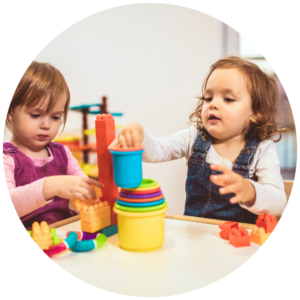
Block play introduces early math skills such as counting, patterns, balance, and spatial awareness. Children experiment with structure and design, building early engineering skills without realizing it.
Art activities strengthen fine motor skills and encourage self-expression. When children paint, cut, or draw, they develop hand strength and coordination while exploring creativity.
Dramatic play areas, such as pretend kitchens or community spaces, build vocabulary, storytelling skills, and social understanding. Children practice communication, cooperation, and empathy while acting out real-life scenarios.
Outdoor play supports physical development, coordination, and healthy risk-taking. It also encourages emotional regulation and reduces stress.
In each of these experiences, children are actively engaged in research-based activities that build skills naturally.
Social and Emotional Growth in Preschool
One of the most important benefits of preschool is learning alongside peers. Social interaction is a critical part of early childhood development.
Through guided play and everyday interactions, children learn how to:
- Share and take turns
- Express their thoughts and feelings
- Listen and cooperate with others
- Resolve conflicts
- Build friendships
Teachers in quality preschool programs guide these interactions, helping children develop empathy, resilience, and confidence. Social and emotional skills learned in preschool lay the foundation for lifelong learning.
Preparing for Kindergarten and Beyond
Families often ask how preschool prepares children for school. Research-based preschool programs build school readiness skills in ways that are engaging and developmentally appropriate.
Children gain experience with:
- Following routines and classroom expectations
- Participating in group activities
- Listening to instructions
- Developing early literacy and numeracy skills
- Working independently and collaboratively
Because these skills are introduced through meaningful, hands-on activities, children build both confidence and competence. They enter kindergarten ready socially, emotionally, and academically.
Why Now Is a Great Time to Enroll
Preschool is a time of incredible growth. Children develop language rapidly, strengthen social connections, and begin forming positive attitudes about learning.
Enrolling in a research-based preschool program gives your child the opportunity to:
- Build confidence and independence
- Develop a love of learning
- Strengthen communication skills
- Form positive relationships with teachers and peers
If you are searching for preschool openings or looking into local early childhood education programs, now is a great time to explore your options. Many programs have openings and are ready to welcome new families into their community.
A Strong Start Begins with Play
Play is not separate from learning in preschool. It is the foundation of it.
When children are given time, space, and support to explore, they develop skills that matter most. They become curious learners, confident communicators, and capable problem solvers.
Choosing a quality, research-based preschool program can give your child a joyful start that supports growth for years to come.